
BMI Calculator
BMI Reference Range
Underweight: BMI less than 18.5kg/m².
Normal BMI: ranges from 18.5kg/m25m² to 24.9kg/m².
Overweight: BMI range from 25kg/m² to 29.9kg/m².
Obesity: BMI range from 30kg/m² to 34.9kg/m².
Extreme Obesity: BMI above 35kg/m².
BMI Fully Explained
What is BMI?
Body Mass Index (BMI) is a widely used measurement that estimates a person’s body fat based on their height and weight.
It provides a quick and easy way to categorize individuals into weight ranges such as underweight, normal weight, overweight, and obese.
BMI is recognized and endorsed by major health organizations including the World Health Organization (WHO), the Centers for Disease Control and Prevention (CDC), and the American Heart Association (AHA) as a practical screening tool to assess whether a person’s weight may be placing them at risk for health problems such as diabetes, hypertension, and cardiovascular disease.
The BMI is calculated using the formula:
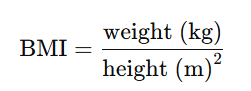
or, when using the imperial system (commonly in the United States):
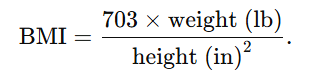
These formulas yield a single number that can be compared against standard ranges.
Generally, a BMI below 18.5 is considered underweight, 18.5–24.9 is normal, 25–29.9 is overweight, and 30 or higher is classified as obese.
While BMI is convenient and widely accepted, it does have limitations. It does not differentiate between muscle and fat mass, nor does it account for fat distribution or other individual factors such as age, sex, or ethnicity.
For instance, athletes or individuals with a large muscle mass may have a high BMI and be incorrectly labeled as overweight or obese, despite having low body fat and being in excellent health.
Similarly, older adults or those with reduced muscle mass may have a normal BMI but still possess excess body fat.
Therefore, while BMI is a useful screening tool, it should be interpreted alongside other health assessments such as body composition, waist circumference, and overall lifestyle habits for a more accurate picture of one’s health.
